
PingPoint is out — now on the App Store and Google Play
After a year of work the app has been approved and is on both stores. The shop is open too.
1 min read
6 Oct, 2026
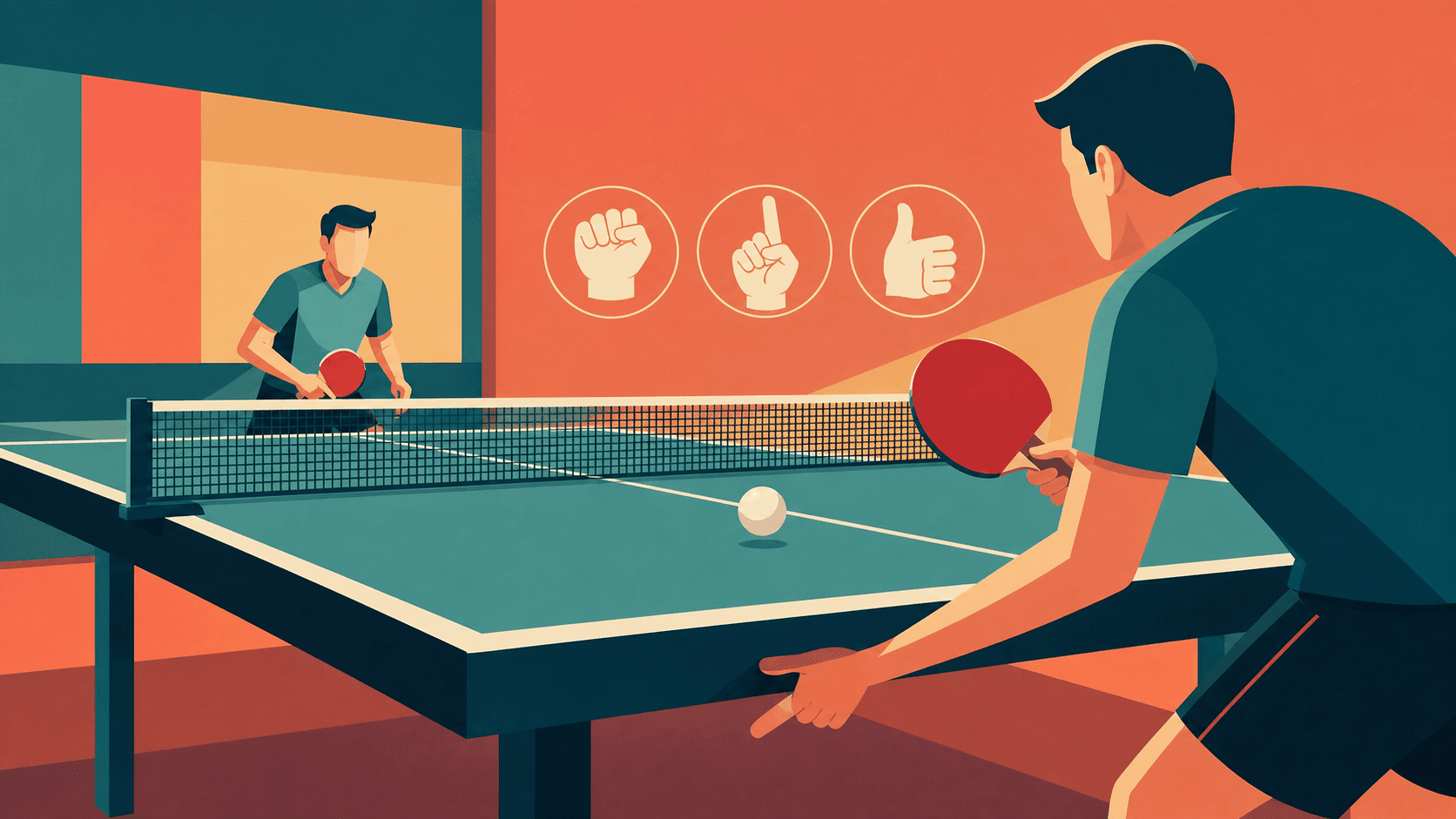
In table tennis doubles, the serve is a team decision. The server makes the contact, but the partner usually plays the next ball, so both players need to know what kind of return the serve is trying to create. That is why good doubles pairs use hand signals before serving.
A signal should tell your partner the serve's spin, length, or direction without a spoken conversation. It does not need to be dramatic. The best codes are short, clear, and agreed before the match.
| Signal | Serve Call | What Your Partner Should Expect |
|---|---|---|
| Closed fist | No-spin short serve | A soft or slightly high return if the receiver misreads the ball. |
| Little finger raised | Backspin short serve | A push, touch, or controlled flick. |
| Index finger raised | Long serve | A fast return, block, or topspin opening. |
| Thumb up | Topspin short serve | A ball that may pop up or invite a quick flick exchange. |
| Thumb pointing left | Topspin sidespin to the left | A return pulled or deflected toward the left-side pattern. |
| Thumb pointing right | Topspin sidespin to the right | A return pulled or deflected toward the right-side pattern. |
Most players show the signal underneath or just below the table surface on the server's side. From there, the table blocks the opponents' view, while the partner can still read the gesture.
Hand signals do not replace skill. They make skill easier to use together. When the partner knows the serve before it happens, they can stand in the right place, prepare the right racket angle, and attack the right ball.
After a year of work the app has been approved and is on both stores. The shop is open too.

Apple and Google have approved PingPoint for external testing. Anyone can install it now — here are the steps for iPhone, Apple Watch, Android and Wea...

Press once when you win a point, twice when your opponent does. How a Bluetooth button on your wrist keeps the score without taking you out of the gam...
After a year of work the app has been approved and is on both stores. The shop is open too.
After a year of work the app has been approved and is on both stores. The shop is open too.
Apple and Google have approved PingPoint for external testing. Anyone can install it now — here are the steps for iPhone, Apple Watch, Android and Wea...
Apple and Google have approved PingPoint for external testing. Anyone can install it now — here are the steps for iPhone, Apple Watch, Android and Wea...
Press once when you win a point, twice when your opponent does. How a Bluetooth button on your wrist keeps the score without taking you out of the gam...
Press once when you win a point, twice when your opponent does. How a Bluetooth button on your wrist keeps the score without taking you out of the gam...
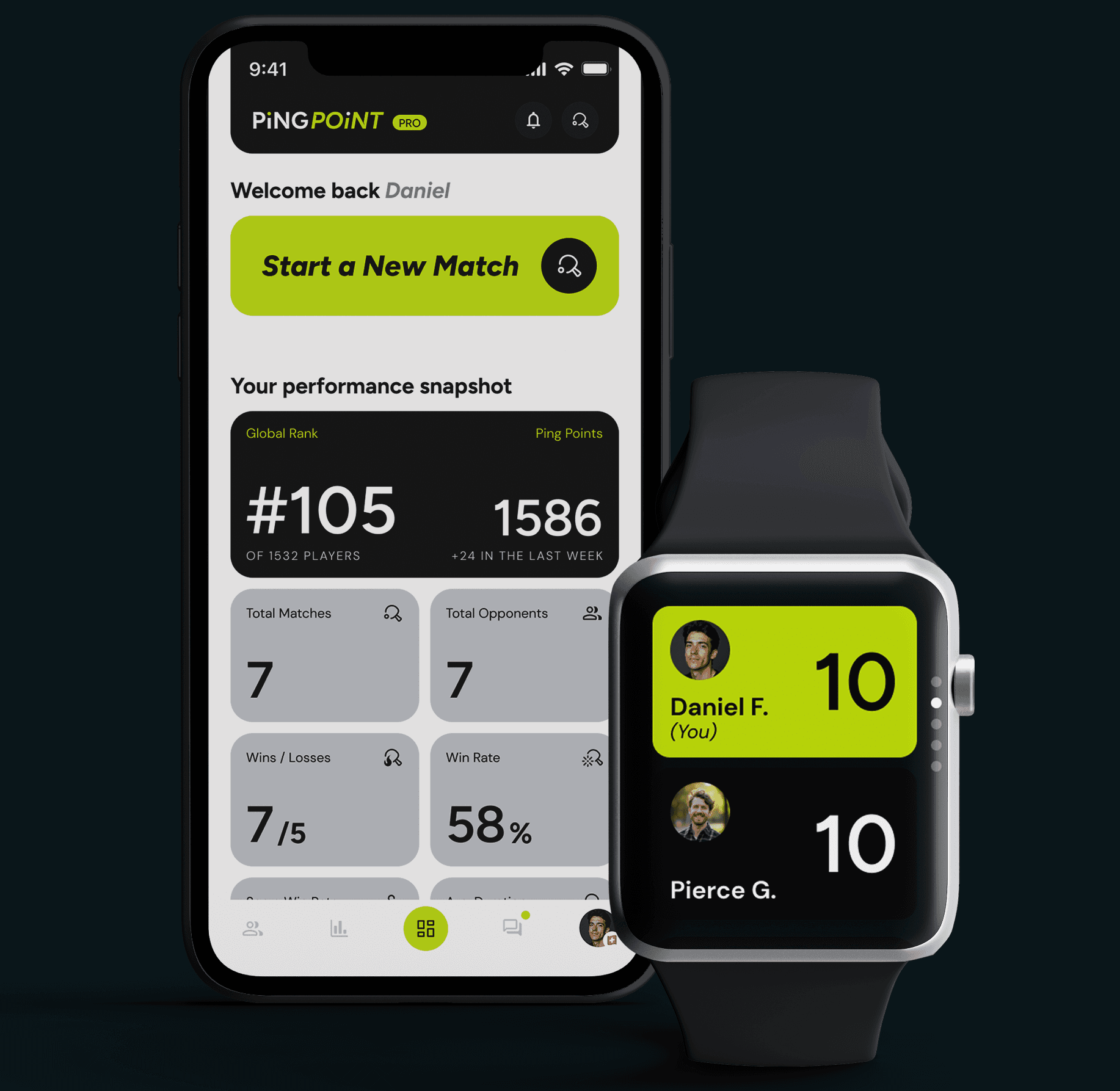
Download the app and take your game everywhere: on mobile, tablet, or smartwatch.

